
Death and Life: A Physician’s Guide to a Good Death
We live in a paradoxical time.
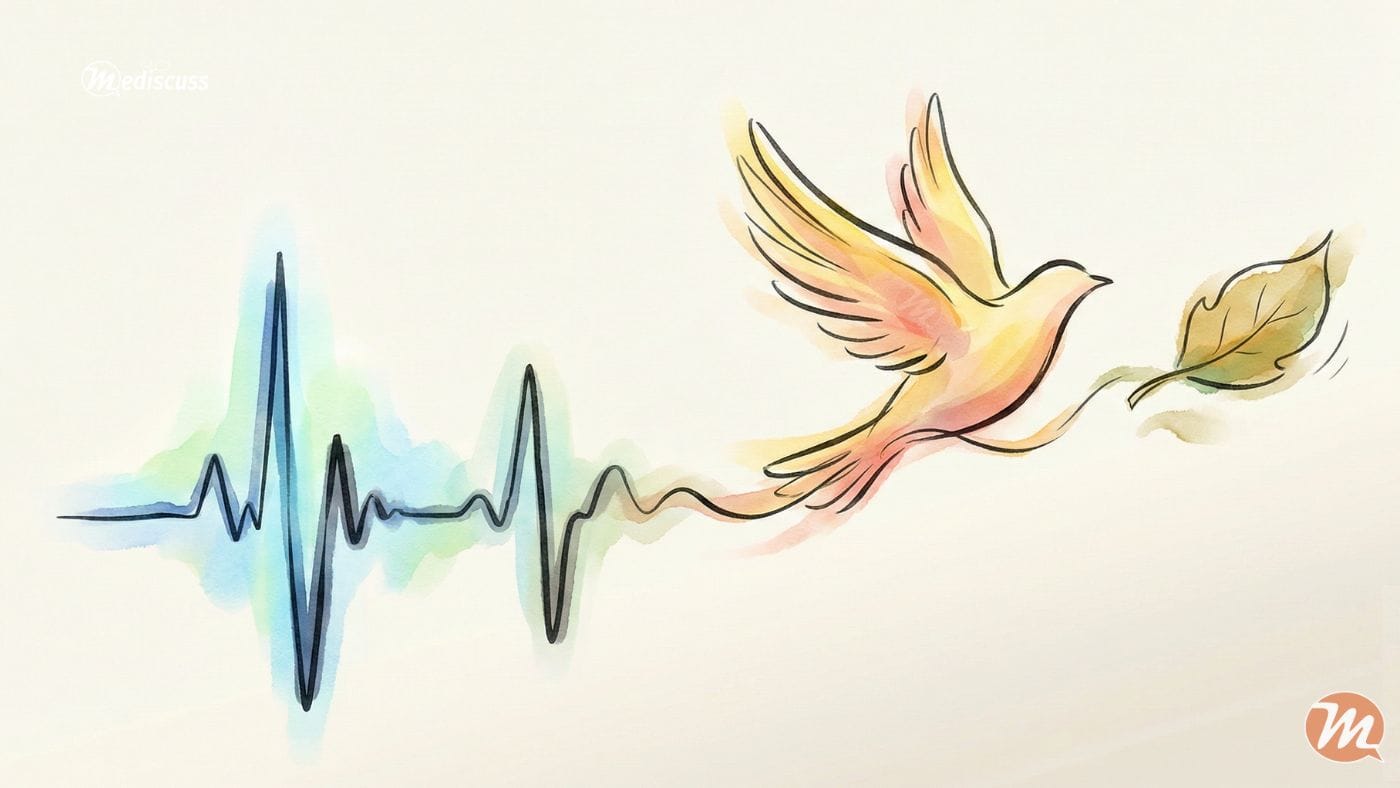
Our machines can keep a heart beating long after the soul has left the room. We treat death not as a natural closing chapter, but as a clinical error… a failure of the system. This view denies us the profound, raw humanity required to face the end.
I have stood by many bedsides as the cardiac monitors flatlined. The silence that follows is never empty. It is heavy. It is instructive. To understand life, we must stop looking away from its limit.
The Biology
We often romanticize death or fear it as a sudden thief. Biologically, it is neither. It is a natural process that no one escapes.
Think of the body as a vast, interconnected power grid. For decades, it sustains energy, repairs faults, and keeps the lights on. Death is the gradual dimming of this grid. Organs, the heart, the lungs, the brain, do not just “stop.” They cease to communicate with each other. The complex interplay of cells quiets down. The music fades.
As doctors, we are trained to fix the grid. We patch the wires. We boost the voltage. But there comes a moment when the infrastructure itself says, “Enough.” Recognizing this moment is the hardest skill in medicine. It is the difference between extending life and prolonging dying.
The Human
Data tells us how people die. Stories tell us how people live.
I remember Sri Nagesh. He was 75. He carried a heavy medical file. Diabetes, high blood pressure, high cholesterol, liver disease. But he walked lightly. He had an infectious laugh that seemed to ignore his biology entirely. He would invite me to his home, not as a doctor, but as a guest. He chided me for working too hard. He forgot his pills but never forgot a wedding invitation.
Then came the decline.
Chronic liver disease is a slow, exhausting thief. Over two years, I watched Nagesh shrink. The effusive host became the frail patient. When he finally passed away in the ICU, the sterile environment felt very inadequate for a man of such warmth.
I attended his Vaikunta Samaradhane (the 13th-day ceremony). Standing before his photograph, surrounded by flowers and chanting, the “doctor” in me vanished. I silently wept. Not for the patient who had succumbed to liver failure, but for the senior friend whose hand I could no longer hold.
Clinical Pearl
When a patient dies, do not rush to unplug the machines or fill the paperwork. Stop.
Take 15 seconds of silence at the bedside. Honour the life that was lived in that body.
This simple act restores humanity to the room and helps the medical team shift from “fighting” to “grieving.”
The Action
How do we bridge the gap between fighting death and accepting it? We need to update our internal programming. We must move from a battle mindset to one of preparation.
| Old Belief (The Fight) | New Science (The Acceptance) |
|---|---|
| “Death is a failure of medicine.” | Death is a biological certainty. The goal of medicine is a “good death” when cure is impossible. |
| “We must do everything to keep them alive.” | We must do everything to keep them comfortable and pain-free. |
| “Grief is a problem to be treated.” | Grief is the price of love. It requires understanding, not treating. |
The Cultural Anchor
Rituals are not superstition. They are psychological tools. In India, rites like the Vaikunta Samaradhane and the days that precede that day, act as a bridge. They allow the living close relatives to externalize their grief. They connect the immediate pain of loss to the long continuity of ancestors.
The Bhagavad Gita reminds us: “Just as a man discards worn-out clothes and puts on new ones, the soul discards worn-out bodies.” You do not need to be religious to find comfort here. You only need to recognize that matter is never destroyed, only changed.
The Request
- Do not wait for a diagnosis to think about your end. Talk to your family now. Tell them what dignity looks like to you. Do you want machines? Do you want to be at home?
- Death gives life its urgency. Because our time is finite, every coffee with a friend, every sunrise, and every laugh is precious.
- Own your mortality. It is the only way to truly own your life.
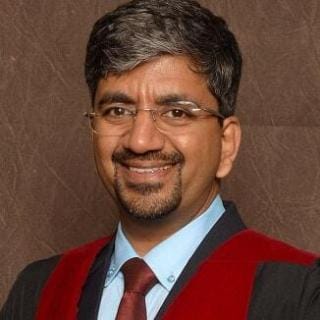
Dr. Shashikiran Umakanth (MBBS, MD, FRCP Edin.) is the Professor & Head of Internal Medicine at Dr. TMA Pai Hospital, Udupi, under the Manipal Academy of Higher Education (MAHE). While he has contributed to nearly 100 scientific publications in the academic world, he writes on MEDiscuss out of a passion to simplify complex medical science for public awareness.