
Doctor, Can You Guarantee A Cure?
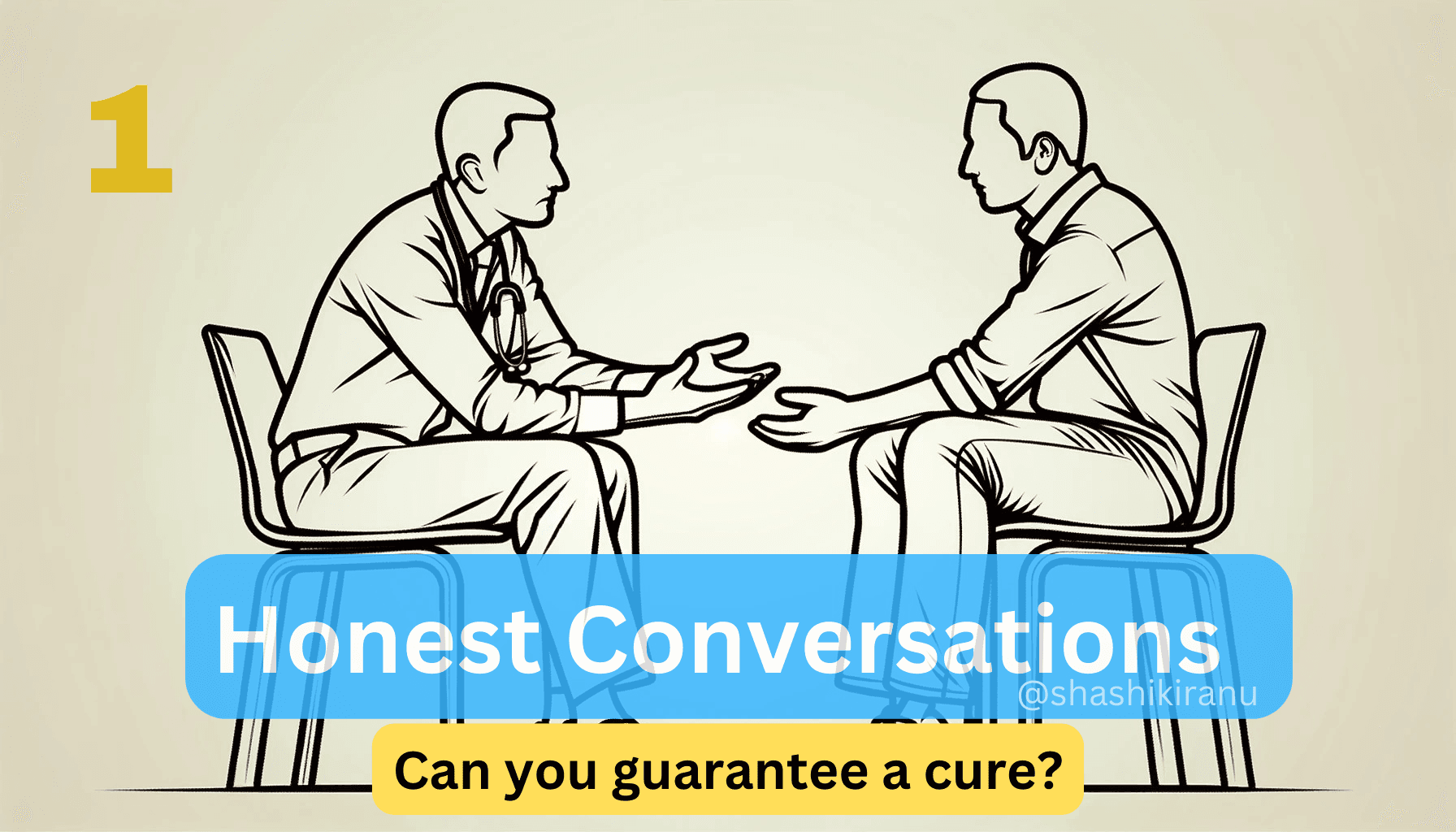
Patient: Doctor, before we start the treatment, can you guarantee that this will cure my disease completely?
Doctor: I truly understand your need for certainty. It is natural to feel that way when your health is at stake. However, to be honest with you, in evidence-based medicine, we never give “guarantees” or make extravagant claims of a 100% cure.
Patient: Why is that? If the medicine is good, it should work for everyone, right?
Doctor: Not exactly. The human body is not a machine made in a factory; it is a complex biological system. Your body’s response to treatment depends on your genetics, your lifestyle, and how severe the disease is. Two people with the exact same illness might respond very differently to the exact same tablet.
Patient: Does that mean your treatment might not work?
Doctor: It means we deal in “probabilities,” not absolute certainties. Based on research, we know this treatment gives you the best possible chance of recovery. But factors like your immunity or even stress levels play a role. We can control the treatment, but we cannot fully control how your body accepts it.
Patient: So, you are saying modern medicine doesn’t have all the answers?
Doctor: Exactly, and admitting that is our strength, not our weakness. While we have made incredible advances, some conditions are manageable rather than fully curable. For example, we manage diabetes or blood pressure to keep you healthy, but we don’t claim to “delete” the disease from your body.
Patient: But I see advertisements from some alternative medicine practitioners promising a “100% Guaranteed Cure” for everything from diabetes to cancer. How do they do that?
Doctor: That is a very important question. Often, those “guarantees” are marketing slogans, not scientific facts. In modern medicine, we are bound by ethics to tell you the truth, even if it is uncomfortable. We rely on rigorous data and clinical trials. If a system claims a “Guaranteed Cure” without publishing scientific evidence, it is usually relying on faith or marketing rather than biological reality.
Patient: Does that mean their guarantees are fake?
Doctor: I suggest you to be very cautious. A true medical professional knows that nature is unpredictable. If someone offers you a guarantee that sounds fake, it is almost always fake. You have to judge every such claim. False hope can be dangerous if it delays the correct treatment.
Patient: What should I do then? Who should I trust?
Doctor: Trust transparency. Look for a doctor who explains the risks, the benefits, and the realistic outcomes… not one who just tells you what you want to hear. Trust the evidence, not the advertisement.
Patient: I appreciate your honesty. It is helpful to know the reality.
Doctor: That’s correct. An honest relationship is the first step for healing.

Dr. Shashikiran Umakanth (MBBS, MD, FRCP Edin.) is the Professor & Head of Internal Medicine at Dr. TMA Pai Hospital, Udupi, under the Manipal Academy of Higher Education (MAHE). While he has contributed to nearly 100 scientific publications in the academic world, he writes on MEDiscuss out of a passion to simplify complex medical science for public awareness.