
Doctor, Do I Really Need Cataract Surgery?
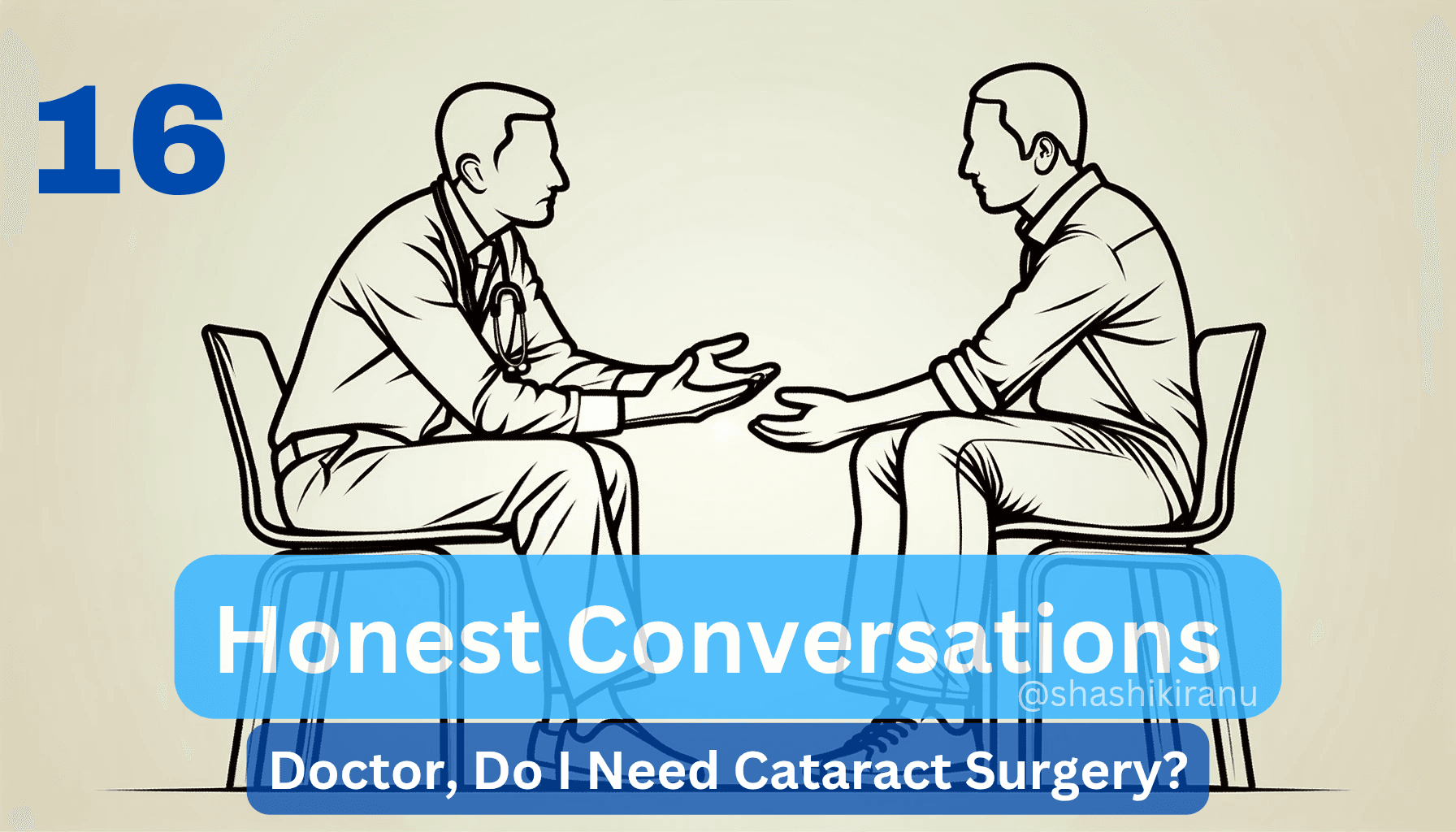
Patient: Doctor, the eye specialist says I have cataracts in both eyes and need surgery. But honestly, I am 75 years old. I have sugar, BP and heart disease. I feel I can see well enough, and I don’t think I need an operation at this age.
Doctor: I understand your hesitation. It is very common to feel that your vision is adequate because cataracts develop very slowly. Your brain adapts to the gradual blurring over the years, so you might not realize what you are missing until the vision is restored.
Patient: But I can read the newspaper if the light is good. Why fix what is not broken?
Doctor: That is good, but cataract surgery is not just about reading newspapers and charts. It is about the quality of your vision, specifically “contrast sensitivity.” This affects your ability to distinguish objects in dim light, like a step in the corridor or an uneven stone on the footpath. For someone of your age, poor vision is a leading cause of falls and fractures. We want to prevent that.
Patient: But I have no major trouble seeing right now. Why treat it if I don’t have symptoms?
Doctor: Think about your diabetes. You take tablets for your sugar every day, even when you feel perfectly fine, right? You do that to prevent complications like kidney failure or nerve damage in the future. Treating a cataract is similar. We don’t just treat it for how you see today, but to prevent the cataract from becoming “hard” and causing complications like glaucoma or severe inflammation later.
Patient: I am also worried about the surgery itself. With my heart condition and stents, is it safe?
Doctor: That is a valid concern, but cataract surgery has evolved significantly. It is rarely done under general anesthesia anymore. It is typically performed under local anesthesia with drops. This places very little stress on your heart compared to other surgeries. Your cardiac risk for this procedure is negligible.
Patient: What about my blood thinners like Aspirin or Clopidogrel? Do I have to stop them?
Doctor: Not always. In many modern cataract surgeries, you can continue taking them. Even if they need to be paused, it is usually only for a very short time, and we manage that carefully. You don’t need to worry about that significantly affecting your heart risk.
Patient: What happens if I just wait? Can we do it later if my vision gets worse?
Doctor: We can wait, but there is a problem with that. With time, cataracts do not just get cloudier… they get harder. A “hard” cataract requires more energy to break up during surgery, which increases the risk of complications and makes the recovery slower. Waiting until the cataract is “ripe” is actually an outdated concept.
Patient: Is this surgery really necessary? In the olden days, our ancestors lived without this surgery. Why is it a must now?
Doctor: Actually, cataracts are not new, and neither is the attempt to treat them. Even in ancient India, surgeons like Sushruta performed procedures for cataracts, but they had to push the lens back into the eye because they didn’t have artificial lenses to replace it. People often lived with blindness or very poor vision back then. Today, we are fortunate to have technology that not only removes the cataract but restores clear sight. We want you to enjoy that quality of life, not just survive like they had to in the past.
Patient: So, doing it sooner is safer?
Doctor: In many cases, yes. It is technically easier for the surgeon and safer for your eye to remove the cataract before it becomes extremely dense. Think of it as fixing the roof while the sun is shining, rather than waiting for the monsoon.
Patient: I see. I didn’t think about the risk of falling or the surgery getting more difficult later. I just thought I was saving myself from unnecessary trouble.
Doctor: It is about maintaining your independence. Good vision keeps you active, helps you engage with people, and keeps your mind sharp. Sensory loss, like poor vision or hearing, is often linked to faster cognitive decline in elders.
Patient: That makes sense. If the risk to my heart is low, and it helps prevent falls, I should probably reconsider.
Doctor: I suggest you discuss this with your ophthalmologist again with this perspective. If you are truly functioning well and safe, watchful waiting is okay. But if the only barrier is fear of the procedure, I would reassure you that the benefits likely outweigh the risks significantly.
Patient: Thank you, Doctor. I feel more confident about making a decision now.
Doctor: You are welcome.
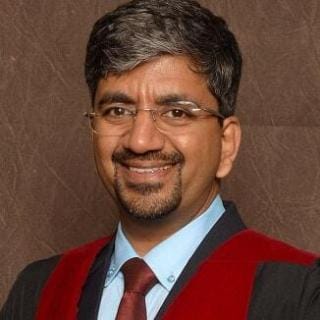
Dr. Shashikiran Umakanth (MBBS, MD, FRCP Edin.) is the Professor & Head of Internal Medicine at Dr. TMA Pai Hospital, Udupi, under the Manipal Academy of Higher Education (MAHE). While he has contributed to nearly 100 scientific publications in the academic world, he writes on MEDiscuss out of a passion to simplify complex medical science for public awareness.