
Doctor, Tell Me About High Blood Pressure
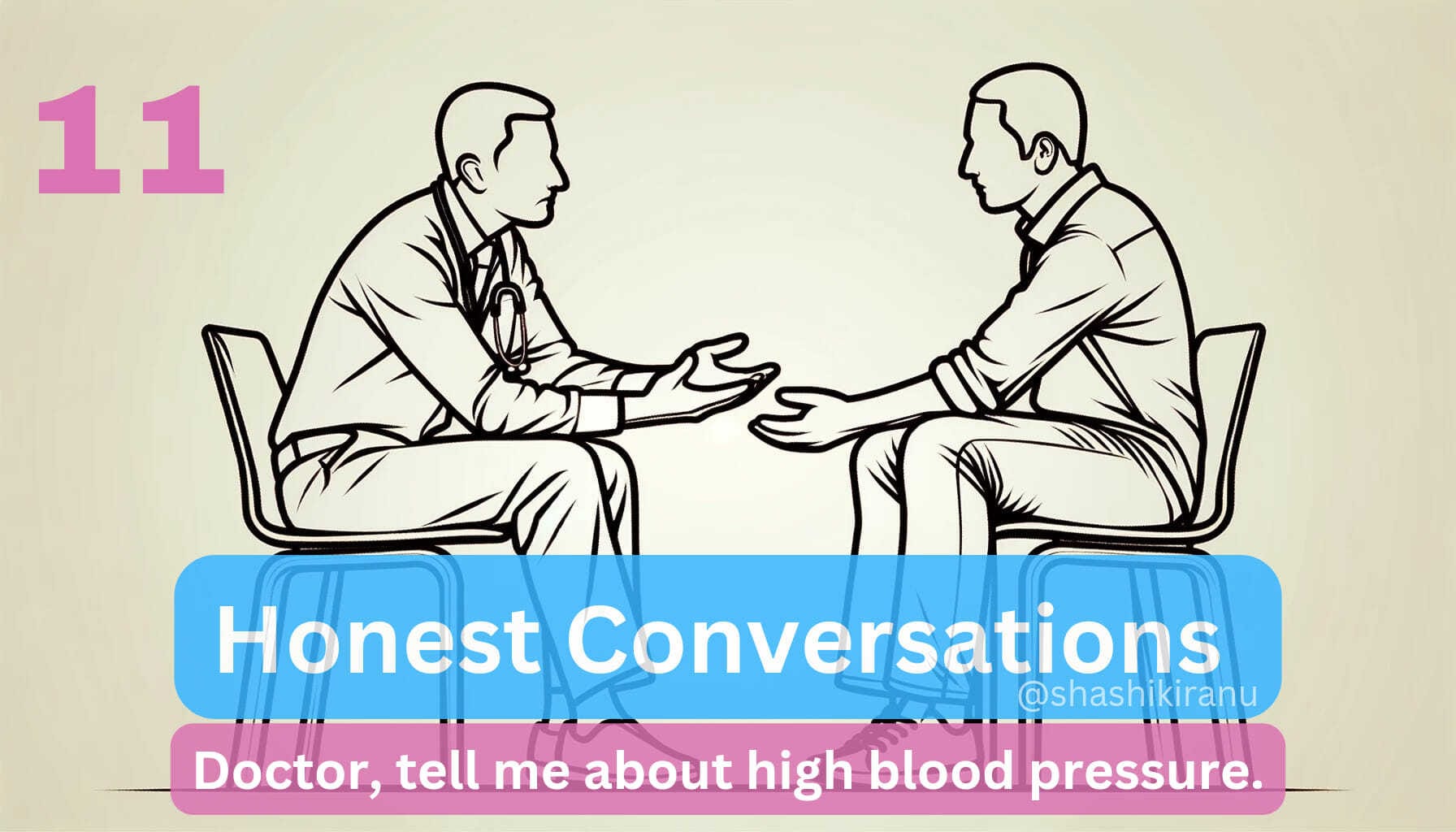
Patient: Doctor, everyone talks about “BP” or Hypertension. I am curious—what exactly is it?
Doctor: Certainly. Hypertension, commonly known as High Blood Pressure, is a condition where the force of the blood pushing against your vessel walls is consistently too high. Think of a garden hose: if you pinch the pipe, the water pressure builds up. If that pressure stays high, it stresses the pipe. That is what happens in your arteries.
Patient: What is considered a “normal” pressure?
Doctor: We measure it with two numbers. The top number (Systolic) is the pressure when your heart beats, and the bottom number (Diastolic) is when your heart rests between beats. A reading above 130/80 mmHg is generally considered high.
Patient: How does this high pressure actually damage the body?
Doctor: It works in two ways. First, the heart has to work harder to pump against that high pressure, which can lead to Heart Failure. Second, the high pressure damages the delicate inner lining of your arteries. Over time, these arteries become thick and narrow, reducing blood flow to vital organs like the kidneys, brain, and eyes.
Patient: Can very high blood pressure tear the blood vessels?
Doctor: Yes, sadly. Imagine a bicycle tyre that is over-inflated. If it hits a bump, it might burst. Similarly, uncontrolled high pressure can cause a blood vessel to burst, especially in the brain. This causes a brain hemorrhage (Stroke). It can also cause microscopic tears where cholesterol piles up, leading to blockages.
Patient: I thought this was only an old people’s disease. Is that true?
Doctor: That is a common myth. Nowadays, we see Hypertension in young adults and even children. Lifestyle factors like lack of sleep, high stress, obesity, and poor diet have made it common across all ages. It is no longer just a disease of the elderly.
Patient: Sometimes my BP is high at the clinic, but normal at home. How do I know which one is real?
Doctor: We call that “White Coat Hypertension.” You might be anxious seeing a doctor, which spikes your BP. To know the truth, we rely on home monitoring or a 24-hour ambulatory BP monitor. It gives us a clearer picture of your average pressure throughout the day and night.
Patient: What about salt? People say if I stop eating salt completely, I can stop the BP medicines.
Doctor: You don’t need to stop salt completely; your body needs a little bit. The problem is the excess salt hidden in things like pickles, papads, salty snacks, and processed foods. Reducing those helps significantly. But remember, Hypertension is multifactorial—stress, weight, and genetics also play a role. Cutting salt helps, but it is rarely a standalone cure.
Patient: If my BP is normal now, can I stop the medicines?
Doctor: No. This is the most important thing to remember. The BP is normal because of the medicine. It is like a dam holding back water. If you remove the dam (medicine) just because the water looks calm, the flood will return. Unless your doctor advises otherwise, never stop the medication.
Patient: But I feel perfectly fine! Why take medicine if I have no symptoms?
Doctor: That is why Hypertension is called the “Silent Killer.” You can walk around with dangerously high BP and feel absolutely nothing—until a stroke or heart attack hits. We treat the numbers to prevent that future disaster, not just to fix how you feel today.
Patient: My friend told me that these BP medicines will damage my kidneys eventually. Is that correct?
Doctor: That is a very dangerous misconception. The truth is the opposite: High Blood Pressure destroys kidneys. It is the number one cause of kidney failure. The medicines we give (like Telmisartan or Enalapril) actually protect the kidneys from this pressure. We monitor your kidneys to ensure the medicine is working safely, but the medicine is the shield, not the weapon.
Patient: So, exercise and diet are not enough?
Doctor: They are excellent partners, but often not a replacement. Think of lifestyle changes (diet, exercise) and medication as the two wheels of a bicycle. You usually need both to keep the balance and move forward safely.
Patient: Thank you, Doctor. I understand now. It is a lifelong maintenance, not a one-time cure.
Doctor: Exactly. Consistent care is the key to a long, healthy life.
Dr. Shashikiran Umakanth (MBBS, MD, FRCP Edin.) is the Professor & Head of Internal Medicine at Dr. TMA Pai Hospital, Udupi, under the Manipal Academy of Higher Education (MAHE). While he has contributed to nearly 100 scientific publications in the academic world, he writes on MEDiscuss out of a passion to simplify complex medical science for public awareness.