
The Mountain Within: Bringing the Silence Home
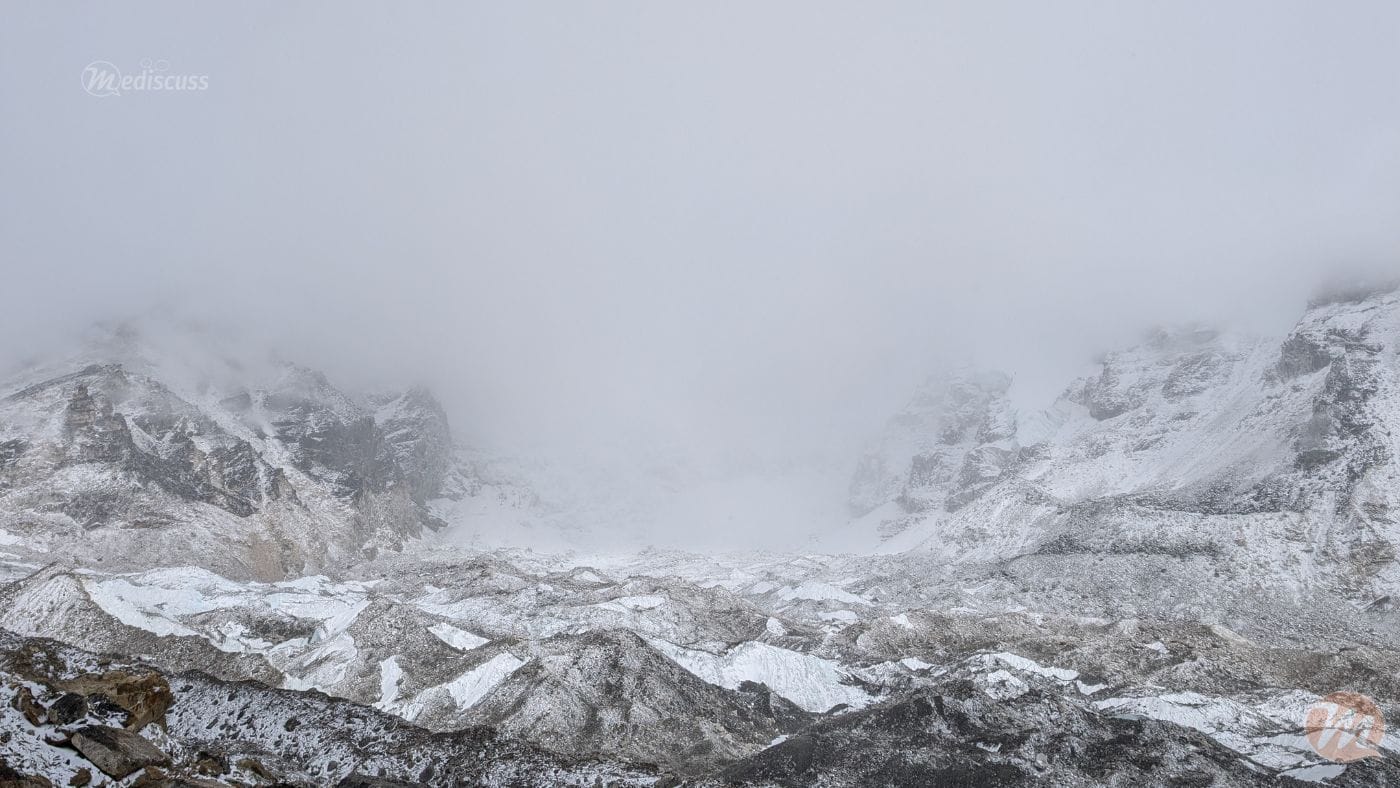
Mountaineers and mountain trekkers have a saying. Getting to the top? That’s optional. Getting down? It’s mandatory.
After the spiritual high of the Base Camp and the brutal physical test of the ascent, it was time for the eventual descent. But looking back, this wasn’t just about losing altitude. It was about understanding. It was about what we were bringing back.
The Shrinking Giants
We left by helicopter from Pheriche. Once again, I found myself strapped into the co-pilot’s seat. The rotors started soinning. We lifted off. And just like that, the perspective shifted.
The mountains changed.
For days, these peaks were massive, intimidating giants we walked among. From above? They shrank. They changed from “obstacles” to “scenery.” I looked down at the vast expanse of Nepal, a land of vertical extremes. I saw tiny settlements sitting on cliffs where a single wrong step could spell disaster.
It makes you stop and think. How do humans survive in terrain this difficult?
It was a lesson in resilience.
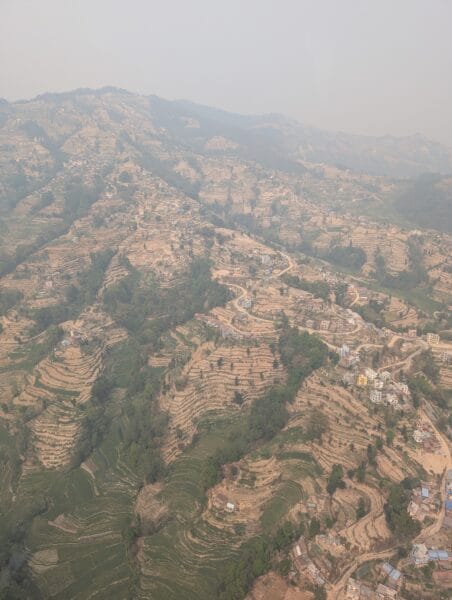
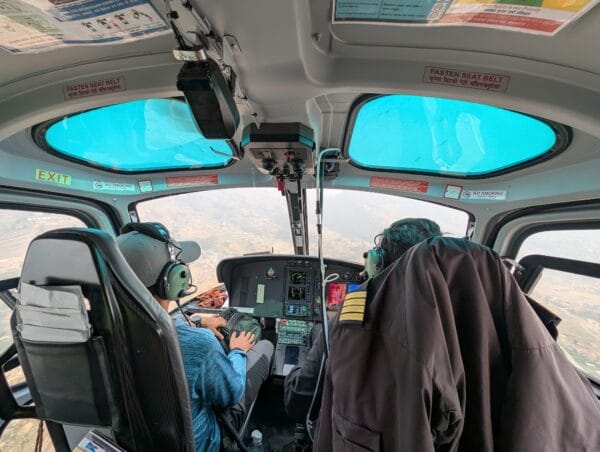
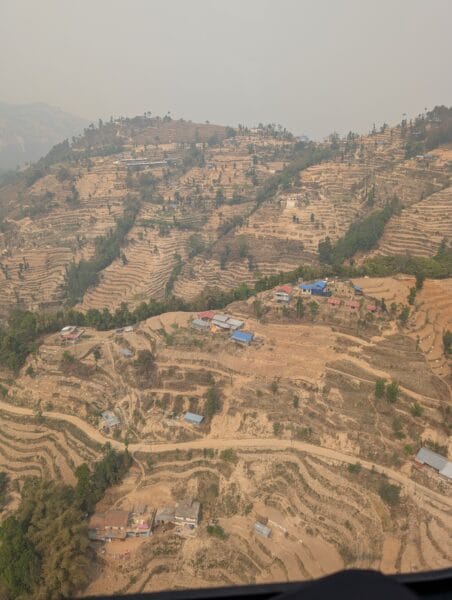
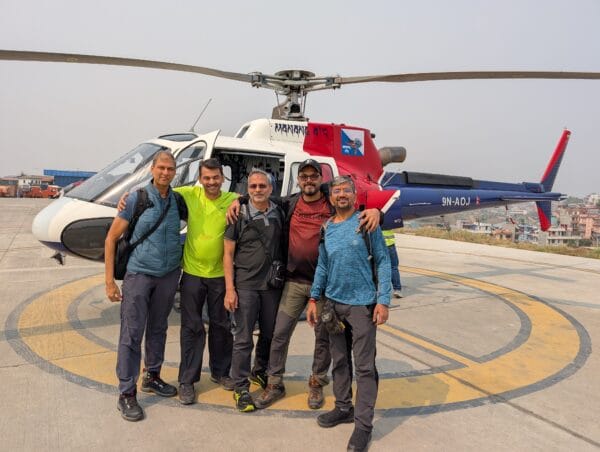
But looking down at those rugged trails, another realization hit me hard.
In the mountains, you learn quickly that fitness is the only true wealth. Being fit is being rich. It’s simple physics and physiology. All the wealth in the world cannot buy you the extra breath you need to climb that mountain. Only your own body can give you that.
Lukla: The “Asian Method” in Chaos
We landed at Lukla.
You might know it as “The World’s Most Dangerous Airport.” No wonder. The runway is terrifyingly short, carved right into the mountainside, ending in a drop-off with no room for error.
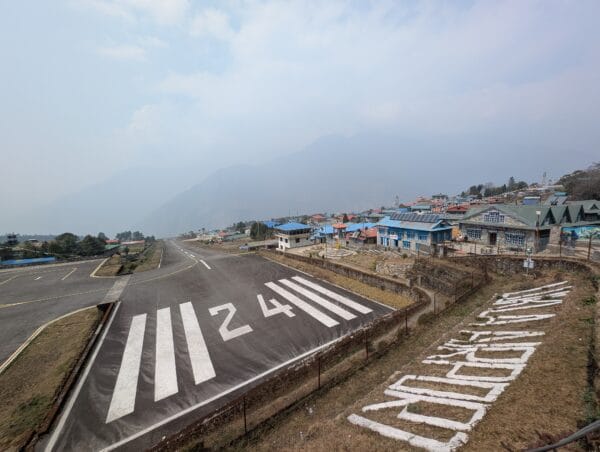
Waiting for our flight to Kathmandu, we watched the operations. At first glance? Chaos. Pure chaos. Flights landed, turned around, and took off in minutes. People rushed. Luggage flew. But I watched closer.
There was a rhythm to it.
Everything moved exactly as it needed to. Everyone knew their role. The “Asian Method,” it looks disorganized if you don’t know what you’re seeing, but it functions with a unique, organic efficiency. It was an adventure just watching it, though I suspect the pilots were having a bit more of an adventure than we were.
A Trekking for the Tongue
We touched down in Kathmandu.
After nearly two weeks of “survival food,” dal bhat, garlic soup, endless energy bars, our bodies weren’t just hungry. We were craving home. We were physically back in civilization, and our stomachs were shouting for comfort.
We stood there debating where to eat when Rajesh pulled out his phone. Suddenly, his face lit up. Pure elation.
“There is an MTR in Kathmandu!” he announced.
I looked at him. Really? MTR? Here? I checked my phone. He was right. We didn’t even discuss it. We just went.
The Taste of Heaven
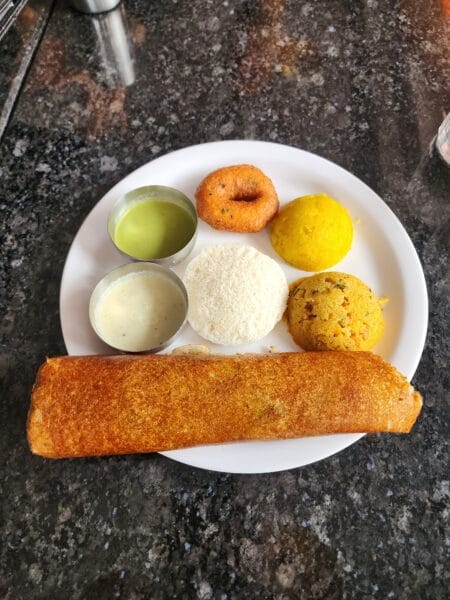
We ordered the South Indian “Breakfast Combo.” Masala Dosa. Idli. Vada. Chow Chow Bath.
When the food arrived, the aroma alone was enough to make us emotional. I’m not exaggerating. The first bite wasn’t just eating… it was a chemical reaction. Something familiar. Something amazing. After the cold, bland days of high altitude, that explosion of spices felt like heaven.
We didn’t just eat. We overate.
We loved it so much we actually went back the next day. The chef recognized us! He smiled and sent over a complimentary “Chef’s Special” of Shyavige Payasa (vermicelli kheer). It was the sweetest possible ending to our culinary detour.
Washing Off the Mountain
Then came the moment every trekker dreams of. The first shower.
For days, we had managed with grit and basics. Standing under hot water in our Kathmandu hotel felt like a luxury money can’t buy. But as I watched the dust and grime swirl down the drain, I felt a strange sense of loss.
I was washing off the physical mountain… the dust from the trails, and the sweat from the climbs. But I desperately wanted to ensure I wasn’t washing off the experience. I wanted the grit of the Himalayas to remain etched in my spirit, even if it was gone from my skin.
The Silence Inside
And finally, the return to Udupi. The return to the grind.
Walking back into the hospital was a shock to the senses. The crowded OPD. A sea of anxious faces. The smell of antiseptic fighting with the smell of humidity and humanity. Then, the soundtrack changed.
The beeping alarms of the ICU. It’s not just noise. It’s a language of urgency. High-pitched. Then came the questions. Patients and relatives clutching reports, students asking for clarification, admin staff and nurses needing papers signed. It was the sheer, unrelenting noise of modern medical practice. After days where the loudest sound was my own breath, this felt like standing inside a jet engine.
Before the trek, I was used to this noise. But this time? It felt different.
I realized that while the noise was outside, I had brought a piece of the “Himalayan Silence” inside me. The mountains had expanded my internal space.
I’m back to my routine now. I treat patients. I teach students. But in the middle of a chaotic day, I can close my eyes for a second. I can see the snow. I can feel the wind. I remember the “zig-zag” path.
I am the same doctor. But I am a calmer human. And perhaps, that is the true summit… not the place you reach, but the space you create inside yourself.
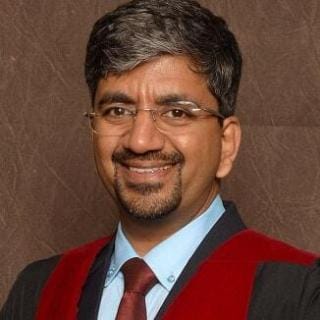
Dr. Shashikiran Umakanth (MBBS, MD, FRCP Edin.) is the Professor & Head of Internal Medicine at Dr. TMA Pai Hospital, Udupi, under the Manipal Academy of Higher Education (MAHE). While he has contributed to nearly 100 scientific publications in the academic world, he writes on MEDiscuss out of a passion to simplify complex medical science for public awareness.
 wpDiscuz