
The Paradox of Progress: Why Modern Medicine Needs Ancient Wisdom
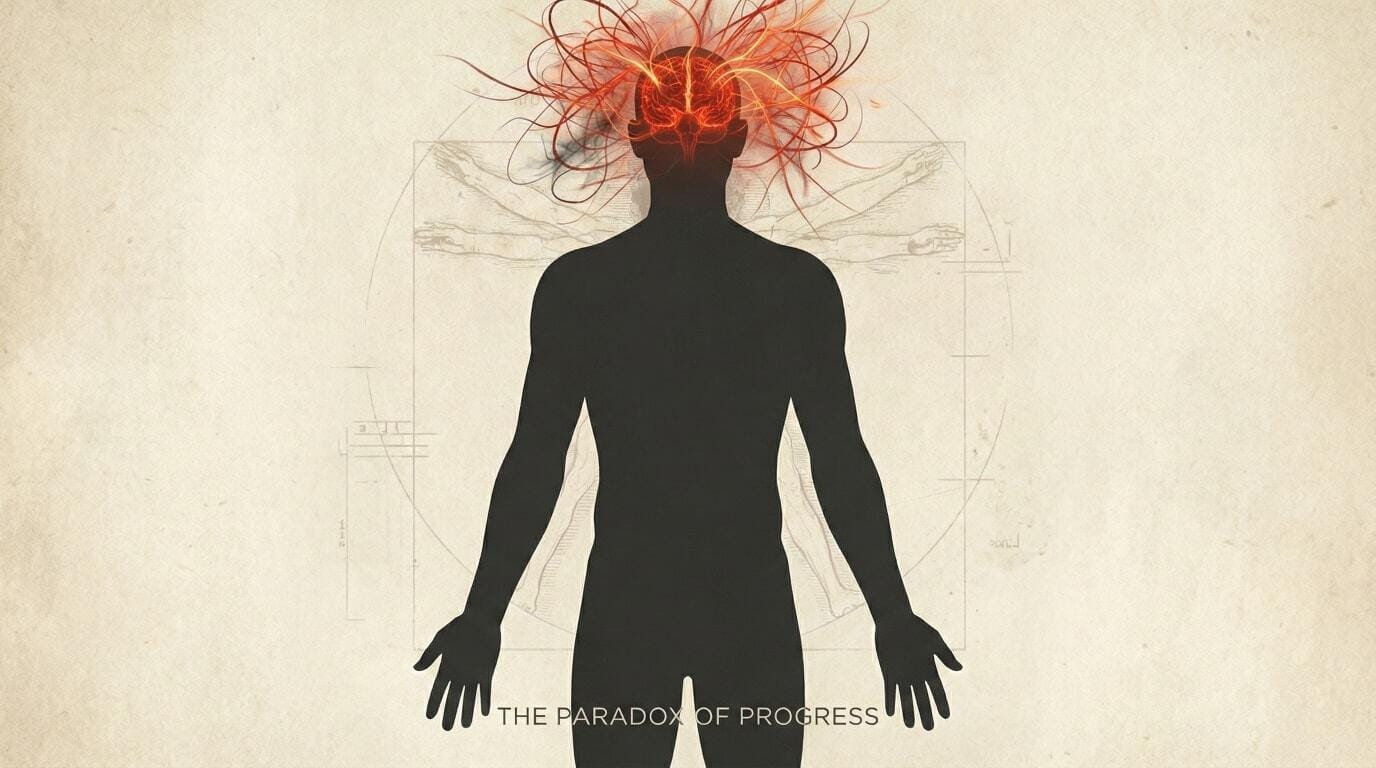
The Triumph of Modern Science
We live in the golden age of medical science. In just one century, we’ve rewritten the destiny of our species.
Deadly infections? We turned them into manageable problems with antibiotics. We’ve mapped the human genome. We peer inside living brains with MRI. We perform organ transplants and robotic microsurgery… interventions that would’ve seemed like magic to our ancestors.
We’ve doubled average life expectancy. We’ve mastered acute care. If you suffer a trauma, severe infection, or surgical emergency, there’s no better time in history to be alive.
Right now. This is the best time to be alive.
The Modern Paradox: Comfort Without Contentment
Yet here we are, standing on top of this mountain of achievement, facing an uncomfortable paradox: We’ve conquered many diseases, but we’ve lost our health.
Industrialization promised to liberate us. Freedom from physical labour. Washing machines, automobiles, and computers would handle the hard work while we enjoyed life. But something unexpected happened.
There were hidden trade-offs.
The physical trade-off: By outsourcing physical work to machines, we kicked movement out of our lives. We became biologically stagnant. Your body is designed for movement. But now it’s trapped in chairs and cars.
The mental trade-off: While your body became sedentary, your mind went into overdrive. The technology that saved you time now demands your attention every waking moment. You’re always on, hooked to notifications, email, and a 24-hour news cycle that never sleeps.
The result?
- We exchanged physical fatigue… which promotes sleep… for mental exhaustion, which destroys it. We swapped the dangers of the jungle for the chronic, low-grade stress of the modern concrete jungle.
- Think about that for a moment. Technology reduced our physical labour. But it left us biologically stagnant and mentally overloaded. We have comfort, yes. But contentment? That’s very hard to find.
Why Are We So Stressed?
If life is easier now, why is anxiety at an all-time high?
Here’s what’s happening. Your biology hasn’t caught up with your environment. Your fight-or-flight system was designed for occasional, life-threatening bursts of adrenaline… like running from a tiger or bear. Today, that same system triggers hundreds of times daily from traffic jams, deadlines, and social media likes.
You’re swimming in cortisol and adrenaline. Not because you’re in danger. Because you’re overstimulated.
Modern medicine is brilliant at treating the consequences of this lifestyle. Calcium-channel blockers for hypertension. Statins for cholesterol. Anxiolytics for stress. But it doesn’t address the root cause: the loss of your internal rhythm.
We have excellent sickness care. But we’re struggling with true healthcare.
Looking Back to Move Forward
To solve a problem that modern life created, maybe we need to look at a manual written before modern life existed.
This isn’t about rejecting science. It’s about integrating it with the timeless wisdom of ancient Indian tradition.
The ancient seers (Rishis) didn’t have MRIs. But they had a profound understanding of the “inner instrument” (antahkarana). They understood that health isn’t just the absence of disease… it’s the harmonious balance of mind, body, and spirit.
They recognized something crucial: the external world will always be chaotic. You can’t control that. But you can cultivate an internal stability that nothing can disturb.
The Ancient Tools: Satva, Rajas, and Tamas
How do you diagnose the “spirit” in a way that relates to your physical health?
The ancient texts offer us a powerful framework: the Trigunas. The three fundamental qualities of nature. When you apply these to modern clinical reality, the picture becomes remarkably clear.
| QUALITY (Triguna) | ANCIENT VIEW (Essence) | MODERN REALITY (Clinical Manifestation) |
|---|---|---|
| TAMAS | Inertia, Darkness, Stagnation. The force of heaviness and resistance. | Sedentary bodies, Metabolic syndrome, Lethargy, “Brain fog” |
| RAJAS | Activity, Turbulence, Passion. The force of movement and desire. | Anxious minds, “Hustle culture”, Insomnia, Sympathetic overdrive |
| SATVA | Balance, Clarity, Light. The state of harmony and knowledge. | Homeostasis, Optimal immunity, Hormonal balance, Calm alertness |
The Prescription
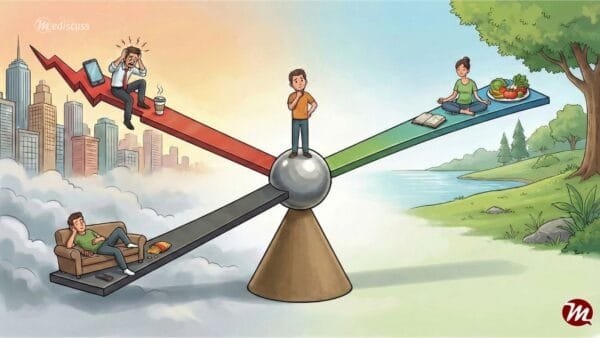
Here’s the diagnosis of the modern human condition:
We’re living in a dangerous combination of physical tamas (sedentary bodies) and mental rajas (anxious minds). The result? A total collapse of satva… the state of healing.
And that matters more than you might think.
In this new series, Medicine & Meaning, we’ll strip away the complexity of these concepts. We’ll explore how moving from tamas and rajas toward satva isn’t just a spiritual goal. It’s a medical necessity for lowering inflammation, regulating hormones, and reclaiming the quality of life we’ve traded away.
Welcome to the journey where modern medicine meets ancient wisdom.

Dr. Shashikiran Umakanth (MBBS, MD, FRCP Edin.) is the Professor & Head of Internal Medicine at Dr. TMA Pai Hospital, Udupi, under the Manipal Academy of Higher Education (MAHE). While he has contributed to nearly 100 scientific publications in the academic world, he writes on MEDiscuss out of a passion to simplify complex medical science for public awareness.