
Vipassana Meditation: An Evidence-Based Guide
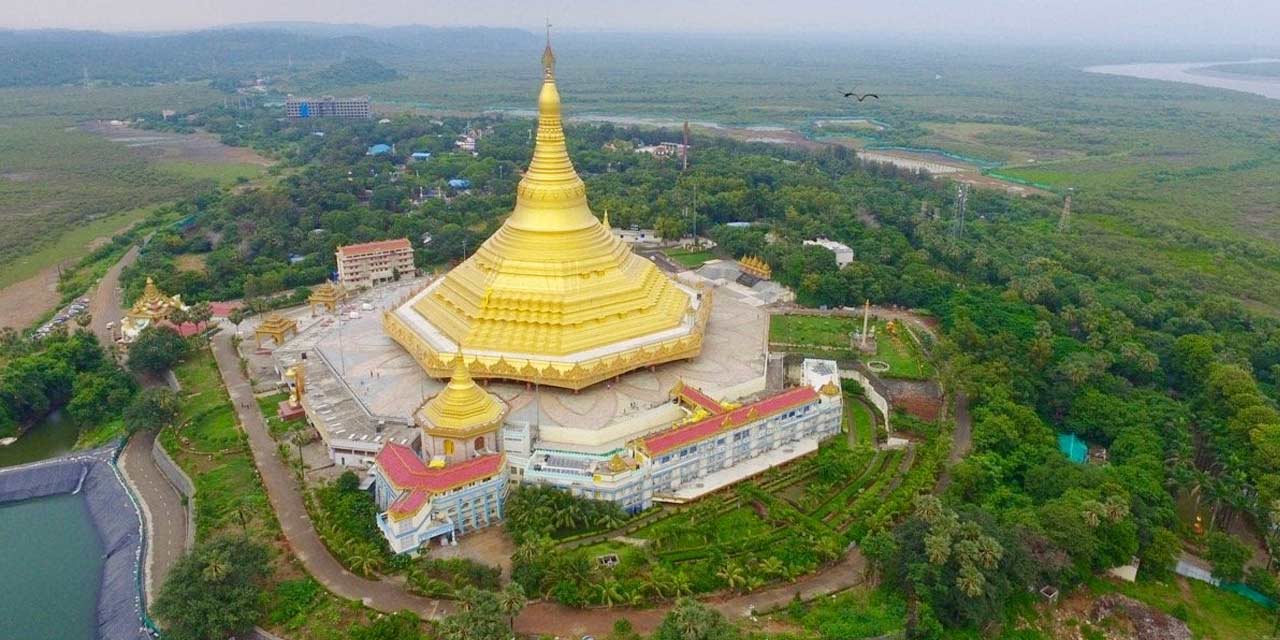
Vipassana is an ancient Pāli word that translates to “insight,” or quite literally, “seeing things as they really are.” It is one of the most ancient meditation techniques originating from India 1. While many people today associate meditation with just relaxation or stress relief, Vipassana goes much deeper than that.
Do you want to read this Kannada?
ಈ ಲೇಖನವನ್ನು ಕನ್ನಡದಲ್ಲಿ ಓದಬೇಕೇ?
Rediscovered by Goutama the Buddha more than 2,500 years ago, this technique was taught not as a religious ritual, but as an Art of Living. It is a universal remedy for the universal maladies we all face, such as stress, anger, and dissatisfaction. Unlike other methods that might ask you to visualize an image or chant a mantra to calm the mind, Vipassana is strictly an investigative process. It involves a systematic scanning of the entire body to observe the deep connection between our mind and our physical sensations. The ultimate goal is to remove mental impurities, like deep-rooted craving and aversion, right at their source 2.
With over 30 years of practice, including the completion of multiple 10-day courses along with advanced 20-day and 30-day courses, I have experienced profound and lasting benefits in both physical health and social well-being.
I have completed a 10-day Vipassana course in 2022, and I can tell you that it is quite different from using a meditation app for few minutes in a day. Vipassana is an intensive mental training. When you meditate for about 10 hours every day in a residential setting, your brain undergoes a shift that is very difficult to achieve in our normal, busy lives. It feels less like a holiday retreat and more like undergoing a deep surgery of the mind to remove old habits.
The 10-Day Course Structure
For a beginner, the only way to learn Vipassana is by attending a residential 10-day course. This duration is necessary because the mind needs time to quiet down, concentrate, and become sharp enough to practice the technique properly 1.
- Day 0 (Arrival): You arrive at the center, deposit your valuables and all electronic devices and reading/writing materials for safe keeping (and for avoiding distraction during serious meditation), and receive an orientation. This is when the “Noble Silence” begins, when you strictly avoid talking, gesturing, or even making eye contact with other students to maintain a quiet mental environment.
- Days 1–3 (Ānāpāna Meditation): For the first three days, you focus entirely on the natural flow of your breath. This practice helps to concentrate and sharpen the mind (Samadhi) so you can observe subtler realities later.
- Day 4 (Vipassana Day): The actual Vipassana technique is introduced. You learn to observe sensations throughout your body without reacting to them, maintaining a balanced mind, which helps in clearing mental defilements like fear and anxiety.
- Days 5–9 (Deepening Practice): You continue to scan your body from head to toe. You practice maintaining “equanimity,” which means that you do not crave for pleasant sensations and you do not hate unpleasant ones.
- Day 10 (Mettā): The silence is finally broken. You learn Mettā Bhavana (loving-kindness meditation) to share your peace and happiness with all beings.
Neurobiology: How It Changes the Brain
Modern medical science is now beginning to understand how Vipassana physically affects the brain. Research using functional imaging shows that this intense practice can lead to lasting changes in how our brain networks operate 3.
| Brain Region | What Happens? | How Does It Help Us? |
|---|---|---|
| Default Mode Network (DMN) | Activity in this network decreases significantly. | The DMN is responsible for our “monkey mind”—the constant wandering thoughts and worrying about oneself. Reducing this activity quiets the mind. |
| Insula & Somatosensory Cortex | These areas become more active and developed. | These parts of the brain help us feel our internal body states. This leads to better “body awareness” or interoception. |
| Prefrontal Cortex | This area, used for decision-making, gets stronger control. | It helps us regulate our emotions better, so we don’t react impulsively to situations. |
| Amygdala | This “fear center” becomes less reactive. | This results in a genuine reduction in fear and anxiety responses in daily life. |
Clinical Applications and Evidence
Vipassana is not just for spiritual growth… it has proven medical benefits, especially in areas where standard treatment protocols struggle to provide a full cure.
1. Treating Addiction
One of the most powerful applications of Vipassana is in addiction medicine. Large-scale studies have been conducted in prisons to help inmates.
For example, a massive program in Tihar Jail (Delhi) between 1993 and 2000 involved over 8,000 inmates. The results showed a significant reduction in hostility and a drop in the craving for substances 4. Similarly, studies in U.S. prisons have shown that inmates who completed this course had lower relapse rates one year later compared to those who did not 5 6.
Award winning documentary of the Tihar Jail Vipassana Program:
Watch the award-winning documentary on the Tihar Jail Vipassana program.
2. Chronic Pain Management
Chronic pain often causes suffering because of our emotional reaction to it. Vipassana teaches patients to observe pain objectively as just a sensation. By separating the physical sensation from the emotional suffering, patients often report that the pain becomes much more manageable, without relying solely on painkillers.
Comparison: Vipassana vs. MBSR (Mindfulness-Based Stress Reduction)
You might have heard of MBSR, which is very popular in hospitals. Here is how Vipassana is different:
- Intensity: Vipassana is a 10-day residential course (over 100 hours of meditation), while MBSR is usually an 8-week class meeting once a week (about 20–30 hours total).
- Technique: Vipassana focuses on deep equanimity toward even the subtlest body sensations. MBSR generally focuses on breath awareness and gentle stress reduction.
- Cost: Vipassana is strictly free of charge and runs only on voluntary donations. MBSR is usually a paid clinical program.
Who Should Be Careful? (Contraindications)
Because the 10-day course is mentally rigorous, it is not suitable for everyone at every point in their life. There are some safety guidelines that we must follow.
Absolute Contraindications (Should not attend): People currently suffering from active psychosis, acute mania, or severe untreated PTSD where they dissociate from reality should not attend. Also, those with active heavy substance use issues must undergo a standard deaddiction first.
Relative Contraindications (Need medical advice): People with severe personality disorders or those who have faced a major trauma very recently should consult a psychiatrist before attending.
How to Join?
If you are interested in taking a course, you can find centers all over the world. All courses are run solely on a voluntary donation basis. You spend only on your travel to the center. There are mobile applications, both Android and iOS, making it easy to choose the dates and places of one’s convenience, in applying for 10-day courses.
Check Course Schedules at Dhamma.org

Dr. Ravichandra C is the Divisional Head of Human Resource Development (HAG-NFU) at the National Tuberculosis Institute (NTI), Bangalore. A Senior Administrative Grade Medical Officer with the Central Health Service since 1996, he serves as a national-level trainer for RNTCP technical guidelines and the Programmatic Management of Drug Resistant TB (PMDT). He regularly facilitates WHO/SAARC fellowships and guides national-level operational research.
Dr. Shashikiran Umakanth (MBBS, MD, FRCP Edin.) is the Professor & Head of Internal Medicine at Dr. TMA Pai Hospital, Udupi, under the Manipal Academy of Higher Education (MAHE). While he has contributed to nearly 100 scientific publications in the academic world, he writes on MEDiscuss out of a passion to simplify complex medical science for public awareness.
References
- Hart W. The Art of Living: Vipassana Meditation as Taught by S.N. Goenka. 1st ed. New York: HarperOne; 1987.
- Vipassana Research Institute. The Way of Liberation from Suffering [Internet]. Mumbai: VRI; [cited 2024 Jan]. Available from: https://www.vridhamma.org
- Hölzel BK, Lazar SW, Gard T, Schuman-Olivier Z, Vago DR, Ott U. How Does Mindfulness Meditation Work? Proposing Mechanisms of Action from a Conceptual and Neural Perspective. Perspect Psychol Sci. 2011 Nov;6(6):537-59. PubMed Link
- Pariyatti. Doing Time, Doing Vipassana [Documentary]. 1997. Available from: https://www.pariyatti.org
- Bowen S, Witkiewitz K, Dillworth TM, et al. Mindfulness Meditation and Substance Use in an Incarcerated Population. Psychol Addict Behav. 2006;20(3):343-347. PubMed Link
- Simpson TL, et al. Vipassana Meditation: Course completion and 3-month outcomes in a correctional setting. 2008.
 wpDiscuz