
Anayasena, The Prayer I Whisper
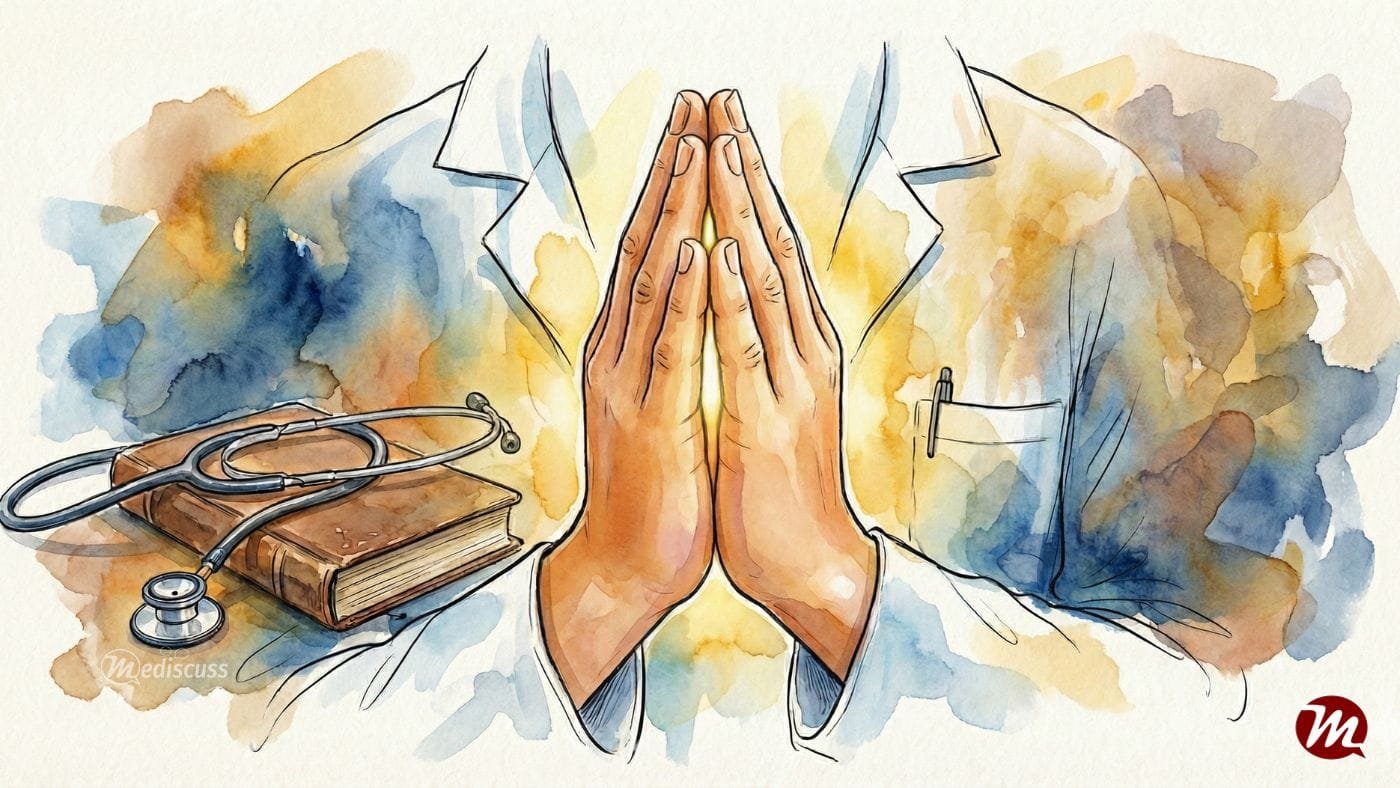
This is Part 3 of a 6-part series on death, dignity, and what medicine can learn from ancient wisdom.
Anayasena Maranam and Dignity in Dying
I’m sitting in my car in the hospital parking area. It’s 7 PM. I should be going home.
Instead, I’m staring at my phone. At a number I need to call.
Mrs. Vasanthi’s family. I need to tell them their mother won’t make it through the night. Septic shock. Multi-organ failure. We’ve done everything. It’s not enough.
This is the call I dislike most. Not the pronouncement of death – that comes with a certain finality, a completion. But this call? The one where I have to say: “It’s time to call everyone. Say your goodbyes.”
I close my eyes. And I whisper the prayer.
The one the elder taught me. The one I’ve started saying to myself before every moment when I’m standing between a patient and the inevitable.
Anayasena maranam,
Vina dainyena jeevanam,
Dehi me kripaya shambho,
Tvayi bhaktim achanchalam.
Grant me death without struggle,
Life without indignity,
Give me this grace, O Lord,
And unwavering faith in You.
I don’t know if I’m praying for Mrs. Vasanthi, for her family, or for myself.
Maybe all three.
…
The first line is the one everyone understands. Anayasena maranam. Death without struggle.
We all want that. The peaceful passing. No pain. No gasping for air. No prolonged agony on machines.
But what does it actually mean?
I’ve seen both kinds of deaths. The ones that are anayasena – effortless. And the ones that are not.
…
Mr. Srinivas was 76. Metastatic lung cancer. We had the conversations early. He’d made his wishes very clear.
“Doctor, when the time comes, I don’t want tubes. I don’t want machines. Just keep me comfortable. Let me die at home if possible.”
His family agreed. Not easily – there were tears, arguments, guilt. But they agreed.
When he started worsening, we shifted him home. Medicines for breathlessness. Oxygen for comfort, not for numbers.
He died on a Sunday morning. His wife was reading the Bhagavad Gita aloud. His daughter was holding his hand. His breathing slowed… slowed… and stopped.
The wife called me. “Doctor, he went peacefully. Just like he wanted.”
That was anayasena. Death without struggle.
…
Compare that to Mr. Vasudev. Similar age. Similar disease. But different choices.
The family wanted “everything.” ICU admission. Ventilator. Medicines to keep his blood pressure up. Dialysis when his kidneys failed. CPR when his heart stopped.
We did CPR. Got him back. Kept him on the ventilator for another week.
He died anyway. But not peacefully. Not effortlessly.
That was ayasena. Death with struggle.
…
The prayer isn’t asking us to give up on life. It’s asking that when death comes – and it will come – we don’t turn it into a fight.
Anayasena isn’t cowardice. It’s wisdom.
It’s the recognition that fighting death at all costs often means causing suffering. Breaking ribs. Inserting tubes. Prolonging the moment of departure until it becomes torture.
The prayer asks: when my time comes, let me go gently. Don’t tear me from the vine. Let me drop.
…
But it’s the second line that hits harder. The one that I could understand well only after turning 50+.
Vina dainyena jeevanam.
Life without dainya.
Dainya means dependency. Helplessness. Indignity. Being a burden. Living in a state you would have found unbearable.
This isn’t about death. This is about life.
The prayer is asking this: as long as I’m alive, let me live with dignity.
…
I had a patient once. Mr. Suhas. Brilliant lawyer. Sharp mind, sharper wit.
Then came the diagnosis. Neurodegenerative disorder. Downhill course.
We watched him decline over two years. First the hands. Couldn’t write. Then the legs. Wheelchair-bound. Then swallowing. Feeding tube. Then speech. Slurred, then unintelligible.
Throughout all this, his mind remained crystal clear. Trapped in a body that was systematically shutting down.
One day he spoke to me – slowly, painfully, looking me in the eye. I could barely understand.
“Doctor, I don’t want to be kept alive when I can’t talk, can’t think.”
His family was sad. “But Appa, we can take care of you! Technology is improving! Maybe a cure…”
He stopped them.
“I’ve lived with dignity. I want to die with dignity.”
They promised. Crying. But they promised.
…
He died six months later. Pneumonia. We didn’t intubate. We kept him comfortable. He was aware until the end – his eyes followed us, responded to questions with blinks.
His last communication was to his daughter:
“Thank you for letting me go.”
That was vina dainyena jeevanam. He lived with dignity until he couldn’t, and then he chose to stop.
…
But I’ve seen the opposite too. Patients kept alive longer than they would have chosen to be.
Mrs. Renuka. Major stroke. Couldn’t speak, couldn’t move, couldn’t swallow. Feeding tube. Diapers. Bedridden. Completely dependent.
Her children couldn’t let go. “Amma is a fighter. She’d want us to keep trying.”
But her eyes… I saw something in her eyes. Pleading. Exhaustion. Please.
She lived like that for eight months before pneumonia finally took her.
Was that life? Or was that dainya – the very state the prayer asks us to avoid?
…
Modern medicine has given us an incredible power: the ability to keep bodies functioning long after they would naturally have stopped.
But we haven’t developed the wisdom to know when to use that power and when to lay it down.
We can keep someone breathing when they can’t recognise their own children. We can keep someone’s heart beating in a permanent vegetative state. We can maintain biological functions when consciousness is gone.
But should we?
Vina dainyena jeevanam asks: is this life?
…
The prayer isn’t asking for death. It’s asking for dignity.
It’s saying: I’d rather die on my own terms than live in a state I find unbearable.
And what’s “unbearable” is deeply personal. For Mr. Suhas, it was losing communication. For someone else, it might be losing mobility, independence, or cognitive function.
The prayer doesn’t define it. It just acknowledges: there are states worse than death. And if we end up in one, we pray we won’t be kept there artificially.
…
The third line is shorter but no less important.
Dehi me kripaya Shambho.
Grant me this grace, O Lord.
It’s an acknowledgement. We can’t control everything. We can make advance directives, express wishes, hope our families honour them.
But ultimately, we’re asking for grace. For circumstances that allow an effortless death and a dignified life.
Some people don’t get that grace. They die in pain despite our best palliative care. They lose dignity despite their wishes. Circumstances – medical, familial, societal – sometimes override our prayers.
So we ask. Kripaya. With compassion. Please.
…
And the last line: Tvayi bhaktim achanchalam.
Unwavering faith in You.
For the devout, this is literal. Faith in God. Acceptance of divine will.
But I’ve come to see it more broadly.
It’s faith in something larger than ourselves. Acceptance that we’re part of a cycle we don’t control.
Birth and death. Growth and decay. The turning of seasons.
We can get angry about it. Fight it. Deny it.
Or we can develop achanchalam – unwavering acceptance. Not fatalism. Not giving up. But acceptance that we’re mortal. That our time here is finite. That our job is to live fully and leave gracefully.
…
I’ve seen patients who’ve achieved this. That unwavering acceptance.
They’re not necessarily religious. Some are. Some aren’t.
But they’ve made peace with their mortality, their finiteness.
When death approaches, they’re not terrified. They’re not clinging desperately to every additional day.
They’re ready. Calm. At peace.
The difference isn’t religious. It’s not about belief in God or afterlife.
It’s about something deeper. Acceptance. Completion. The sense that you’ve lived fully enough that leaving doesn’t feel like being robbed.
…
There’s another concept in our tradition. Mrityunjaya. Victory over death.
When I was younger, I thought this meant defeating death. Making the body immortal. Finding the cure that lets us live for ever.
But that’s not it. That would be a curse, not a blessing.
Mrityunjaya means conquering the fear of death.
It’s not about avoiding death. It’s about reaching a state where death doesn’t terrify you. Where you can face your mortality without panic.
That’s the real victory.
Not living for ever. But living in such a way that when death comes, you can meet it without fear.
That’s the Mahamrityunjaya Mantra we spoke about in the previous part. 1
…
I think I’m getting there. Slowly.
I’m a doctor. I’ve seen death hundreds of times. You’d think that would make me comfortable with my own mortality.
For years, it didn’t. The thought of my own death – my own decline, my own last breath – made me uncomfortable.
Not of the pain. I know we can manage that. Not of the moment itself.
But of incompletion. Things left unsaid. Relationships unrepaired. Work unfinished. The sense that I hadn’t ripened fully yet.
Something has shifted over the years. Maybe it’s attending so many ceremonies. Maybe it’s the cucumber and the vine teaching.
Maybe it’s just getting older.
Or maybe it’s something deeper – the Vedantic teachings finally making sense. The understanding of what the Gita was really teaching.
“You’re not the body. You’re the one experiencing it.”
That shift in perspective – from identifying with the body to identifying with the consciousness – changes everything.
I can’t prove this. I’m not claiming enlightenment at all. But when I hold this understanding – even imperfectly – the fear of death loosens.
Not because I’m denying death. But because I’m questioning who it is that dies.
The body? Yes. The consciousness? I’m not so sure.
Na jayate mriyate va kadachin. The soul is never born, nor does it die.
I am not the body. I am the one experiencing it. When the body wears out, I’ll leave it. Not with terror. But with curiosity about what comes next.
Anayasena. Effortlessly.
I’m not fully there yet. But I’m closer than I was.
…
I make the call.
Mrs. Vasanthi’s daughter answers. I tell her gently: “Your mother’s condition has worsened. I don’t think she’ll make it through the night. You should come. Call whoever you feel should say goodbye to her.”
Silence on the other end. Then crying.
“Thank you for telling us, Doctor. We’re coming.”
They arrive within 15 minutes. The whole family. They gather around her bed. Mrs. Vasanthi dies at 11 PM. Surrounded by family. No CPR. No heroic measures. Just comfort. Just love.
Her daughter finds me afterwards. “Doctor, thank you for letting us be here. For not… fighting it. She would have wanted exactly this.”
Anayasena maranam. Vina dainyena jeevanam.
She got both. Grace in dying. Dignity in living.
…
But I need to say something about guilt.
Because I’ve seen what happens to families who make the right decision – the compassionate decision, the decision their loved one would have wanted – and then torture themselves with doubt for years afterwards.
“Did we give up too soon?” “What if we’d tried one more week?” “Are we the reason they died?”
No.
If you chose comfort care because that’s what your parent wanted, you honoured them. If you chose it because continuing treatment would have been torture, you loved them. If you chose it because their body was saying “enough” and you finally heard it, you were brave.
That decision – to let go, to prioritise comfort over cure, to allow a natural death – that’s not giving up. That’s not failure.
That’s compassion.
…
And if you chose to continue treatment?
“Should we have let them go sooner?” “Did we prolong their pain because we couldn’t accept the truth?”
If you chose to continue because you believed there was still a chance, you hoped. If you chose it because you couldn’t bear to lose them, you’re human. If you chose it because the doctor said “we can try one more thing” and you held onto that, you loved them.
That decision – to fight, to try everything, to hold on – that’s not selfishness. That’s not denial.
That’s love.
…
The disease killed your loved one. Not you.
Whether you chose comfort care or continued treatment, you didn’t cause the death. You made a decision in difficult circumstances with incomplete information and a heavy heart.
The fact that you’re questioning yourself proves you cared. People who make selfish, thoughtless decisions don’t lose sleep over them. You’re losing sleep because you loved deeply and chose under impossible pressure.
The outcome doesn’t determine if the decision was good. The intention does.
…
The rituals helped me understand this. The prayers gave me language for it. The cucumber and the vine gave me a metaphor.
But was this wisdom only ours?
As I went deeper into contemplating end-of-life care, I started noticing something. Other cultures. Other traditions. Other continents.
They’d learnt this too. The words were different. The rituals were different. But the core understanding was the same.
Humans have been dying – and learning how to die well – for many thousands of years.
What could the world teach me that my tradition hadn’t already?
More than I expected.
…
The Complete “Anayasena” Series
This article is part of the six-part series that explores what modern medicine can learn from ancient wisdom about dying well, living with dignity, and letting go with grace.
Subscribe to get an email when the other articles are published.
- How Do I Know I’m Right? The weight of end-of-life decisions
- When the Body Knows. The cucumber, the vine, and ripeness
- The Prayer I Whisper. Anayasena Maranam and dignity in dying
- What the World Taught Me. Ancient wisdom across cultures
- The Conversation Nobody Wants to Have. Guidance for families facing end-of-life decisions
- Coming: The Weight Doctors Carry. The practice physicians need for end-of-life care
Author’s note: Patient names and some identifying details have been changed to protect privacy. Some stories are composites drawn from multiple patients who taught me similar lessons. The emotional truth remains intact.
…
Go back to Anayasena Series Home
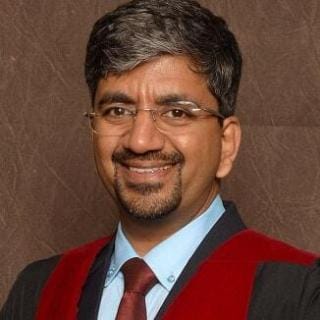
Dr. Shashikiran Umakanth (MBBS, MD, FRCP Edin.) is the Professor & Head of Internal Medicine at Dr. TMA Pai Hospital, Udupi, under the Manipal Academy of Higher Education (MAHE). While he has contributed to nearly 100 scientific publications in the academic world, he writes on MEDiscuss out of a passion to simplify complex medical science for public awareness.
 wpDiscuz