




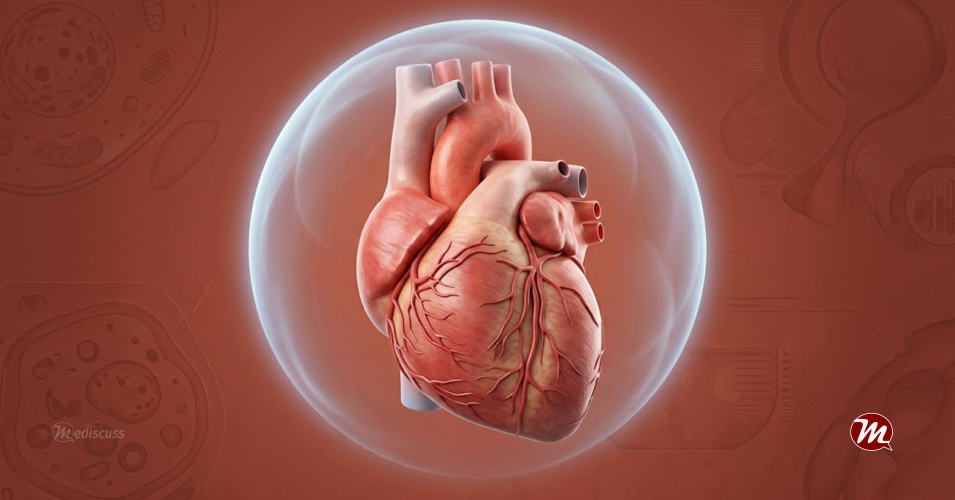
In our hospital, I frequently see young men between 30 and 45 years old coming in with heart attacks. Day in and day out, we read about such untimely deaths in the newspapers too. To be very honest, this is a deeply painful reality for me. Preventable issues like heart attacks and strokes, which stem from unhealthy blood vessels, claim more lives globally than anything else.
The situation in India is even more alarming. Globally, one out of every five people who die from heart disease is one of our own. These problems are striking us 10 to 15 years earlier than they do people in Western countries. A disease that used to affect our grandfathers’ generation at the age of 60 is now hitting us at 30. Why is this happening?
Our eating habits have completely transformed. Processed food, oil, and sugar intake have skyrocketed, while physical exertion has plummeted. As our comforts have increased, that very comfort has become our downfall. The easier life has become, the more complicated our health has gotten. These are not merely “lifestyle diseases”, they are “convenience-driven” diseases.
However, I need to make one thing absolutely clear here. This does not apply to everyone. For some people, no matter how perfectly they eat or how much they exercise, they still struggle with high cholesterol. We call this Familial Hypercholesterolemia, which is essentially a hereditary high cholesterol problem.
The real culprit behind most heart attacks and strokes is atherosclerosis. We use the term atherosclerosis to describe the process where bad cholesterol accumulates inside our blood vessels over many years, forming hardened clumps. This grease or fatty plaque grows completely silently. Then, one random day, this fatty clump suddenly bursts open. Blood clots over the rupture, completely sealing off the blood vessel. If this happens in a blood vessel of the heart, it is a heart attack. If it happens in a blood vessel of the brain, it is a stroke.
Do you know the biggest danger of all this? This silent process can go on inside your body for decades without showing you a single outward symptom.
What exactly do these Statin medications do?
Statins are the most important medications we have for controlling cholesterol. In our practice, we commonly use medicines like Atorvastatin and Rosuvastatin. They work by controlling the enzymes in your liver that are producing more cholesterol than your body actually needs. When this production drops, your liver starts pulling the “bad cholesterol” (LDL) straight out of your bloodstream. Because of this, your blood LDL levels drop by 30 to 50 percent, and the process of plaque forming in your blood vessels drastically slows down.
There is one more crucial point. These statin medications do not just lower cholesterol; they have several other fantastic effects on your blood vessels. These drugs keep the inner lining of your blood vessels healthy. They reduce the inflammation that causes fatty plaques to grow in the first place. They reinforce and stabilize the fatty plaques that have already formed, preventing them from bursting open. On top of that, they even reduce the risk of blood clotting to some extent. So, far beyond merely dropping your cholesterol numbers, statins protect your heart as a whole.
Please do not stop the medication the moment your report comes back normal
This is the absolute biggest mistake many people make. After taking statins for two months, they get a blood test done and the cholesterol report comes back “normal”. Instantly, they think, “My disease is cured!” and they stop the medication without even asking their doctor. Please do not forget that your report is normal entirely because of that tablet. If you stop the pill, your cholesterol will shoot right back up to its previous dangerous levels in just a matter of weeks.
Common fears of the general public and the actual truth
Thanks to reading things on the internet or listening to hearsay, many people hesitate to take these medications. I see folks like this in our hospital quite often. Let us look at the common doubts our people have and the scientific truth behind them.
“I heard taking statins will give you diabetes.” This is the biggest fear haunting people. There is a tiny bit of truth to this, but most people do not understand the actual math behind it. Let me break it down for you very simply, so please pay attention.
As we get older, we all have a natural, baseline risk of getting diabetes anyway, right? For example, let us assume your natural risk of getting sugar disease in the next 4 years is 12 percent. Science says that statins increase this risk by 9 percent. The moment people hear “9 percent”, they panic. But this risk does not suddenly jump from 12 to 21 percent! Nine percent of 12 means it only increases by a mere 1.08 percent. In the language of statistics, this is the real difference between relative risk and absolute risk.
That means your actual risk goes from 12 percent to about 13 percent. However, the benefit of this very same medication in saving your body from a heart attack and stroke is hundreds of times greater than that tiny 1 percent risk. Should you get your sugar tested occasionally while taking it? Absolutely yes. But does it make any sense to abandon a life-saving, health-protecting medication over a one percent fear? You think about it.
“They say this causes memory loss and dementia.” This is a pure lie. In reality, medical evidence proves the exact opposite. In 2025, data from over 70 lakh patients across 55 different studies was reviewed. The risk of getting dementia among those taking statins was actually 14 percent lower. The risk of Alzheimer’s disease was a whole 18 percent lower! Instead of harming the brain, statins protect it by improving blood circulation and preventing inflammation.
“Body aches and muscle pains will start.” It is true that about 5 to 10 percent of people taking statins experience muscle pain. You must bring this to your doctor’s attention. But dangerous levels of muscle damage happen to only one in a lakh. In the vast majority of cases, doctors simply change the dose of the tablet or switch you to a different medicine to easily solve this problem. Please do not say no to statins out of this fear.
“I heard it ruins the liver.” Serious liver damage from today’s modern statin medications is exceedingly rare. That is exactly why most medical guidelines now clearly state that there is no need to repeatedly do liver tests. Forget about ruining the liver, these statins actually help us in a major way to treat the increasingly common problem of “fatty liver”.
“Cholesterol is God’s creation, so isn’t it a good thing?” This is a very important philosophical point. You might have heard some people, especially our elders, saying something like this: “Cholesterol is good for the body. We need cholesterol to produce hormones. Did God simply create cholesterol in our bodies for no reason? Without it, our very cells would not exist. If that is the case, why should we swallow pills to forcefully lower it?”
On the surface, this argument sounds very correct, doesn’t it? Yes, cholesterol is absolutely essential for our body. We definitely need it to build our cells. But, everything in life has a “limit”, right?
Think about it for a moment. Blood sugar (glucose) is also absolutely essential to give our bodies energy. That is also God’s creation. But just because of that, when that sugar crosses the limit and becomes “diabetes”, do we just sit back with folded hands saying, “This is the sugar God gave us, let it be”? True, hormones like thyroid protect our bodies. But when their balance goes haywire, should we just leave them alone? The story of cholesterol is exactly the same. When it crosses the safe limit, it forms fatty clumps in your blood vessels and becomes a direct threat to your life.
Now, let us come to the argument that “Everything in God’s creation is good, so we should not interfere with it.” The dangerous bacteria in this world were also created by the same God, right? So, when we get pneumonia, do we stop taking medicines saying, “Poor things, these bacteria are also God’s creation. Why should we trouble them? We are all going to die one day anyway, so let my life end today from this bacterial infection”? Definitely not. Please do not apply such logic.
God has given us an absolutely wonderful body, and along with it, the wisdom and the science to fix it whenever something goes wrong inside. When the rules of the body are broken and limits are crossed, using appropriate treatment to bring things back under control and protect our future is true wisdom, not these blind arguments.
Lifestyle is the very first step
There is one incredibly important thing we all need to understand. A statin medication is never a replacement for a good lifestyle. It is merely an additional layer of support for your daily efforts.
For a healthy heart, daily exercise (at least 30 minutes of brisk walking), a balanced diet full of vegetables, fruits, lentils, and fiber, staying far away from smoking, and maintaining the right body weight form the fundamental foundation. These habits do not just improve your heart; they also vastly improve your sleep, your energy levels, and your overall mood.
Not everyone needs a statin. If your risk level is low, a simple change in lifestyle is more than enough. But first, you need to know exactly what your risk is. Use the Heart Risk Calculator (https://mediscuss.org/heart-risk) to calculate your cardiovascular risk and discuss it thoroughly with your doctor.
Why do we need to care so much about the heart?
Because, once the inside of your blood vessel gets damaged, bringing it back to its original state is incredibly difficult. Therefore, preventing the disease from happening in the first place is the real treatment.
We use several weapons together to lower your heart risk. Lifestyle changes are the most powerful and always come first. Statins, blood pressure medications, and diabetes medicines target very specific problems. Blood thinners like Aspirin are given only to those who have already suffered a heart attack or a stroke.
Our ultimate goal is not just to fix a number on a lab report. The true goal is to manage your diet, exercise, smoking habits, BP, cholesterol, and sugar all together, and reduce your overall risk before some massive disaster strikes. After all, your family needs you, don’t they?
Final Word
I have laid out everything in front of you without hiding a single thing about statin medications, their benefits, and the problems they might cause, based exactly on what science says.
Look, I am certainly not Lord Krishna, and you are not Arjuna. But in the Bhagavad Gita, after unravelling all the complex truths of life, Krishna tells Arjuna one profound thing: “Yathechchasi tatha kuru“. It means, “I have told you everything I needed to tell you, now do whatever you feel is right.”
That is exactly what I am telling you today. I have fulfilled my medical responsibility. Now, do whatever your heart tells you, whatever you feel is the right thing to do. The final decision is entirely in your hands.



Leave a Reply