






Applying Ancient Wisdom to Modern Child Development
As a physician, I often observe that the root cause of family stress is not always medical… it is often behavioural. In my daily interactions with families, I notice a growing paradox. We see young children left alone with screens, without guidance, while young adults are being micromanaged, without independence. This is usually due to parenting styles.
We seem to have confused the timeline of care. We are abandoning them when they need us most and controlling them when they need to be free.
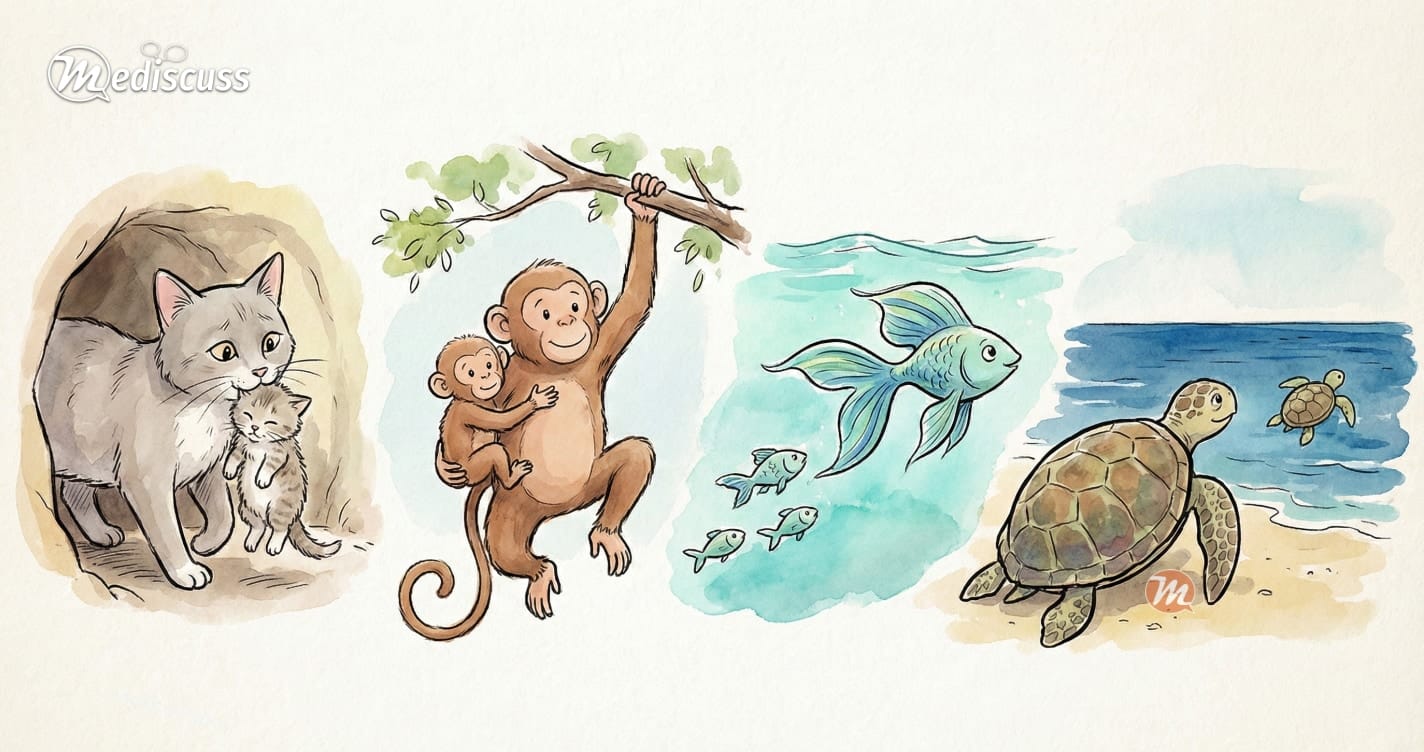
To correct this balance, we can look to the ancient Indian concept of Kishora Nyaya. It offers four animal metaphors: the Cat, Monkey, Fish, and Turtle. These serve as a perfect guide for how parenting must evolve as a child grows.
Bilingual Article / ದ್ವಿಭಾಷಾ ಲೇಖನ
Do you want to read this Kannada?
ಈ ಲೇಖನವನ್ನು ಕನ್ನಡದಲ್ಲಿ ಓದಬೇಕೇ?
1. The Cat Style (Ages 0–4): The Phase of Total Security
In nature, a mother cat carries her kitten by the neck. The kitten surrenders completely, and the mother takes 100% responsibility for its movement and safety.
The Lesson: For infants and toddlers, you must be the cat. They cannot make decisions for themselves. You decide their diet, their sleep schedule, and their safety. This is not the time for “freedom,” it is the time for total protection. Your job is to make them feel absolutely secure so they can grow without fear.
2. The Monkey Style (Ages 5–12): The Phase of Partnership
As the child enters school, the dynamic has to shift.
A mother monkey jumps from tree to tree, but she does not hold the baby… the baby must hold onto her. If the baby does not make an effort to grip, it will fall.
The Lesson: This is the age of discipline and effort. You provide the support (the school, the books, the food), but the child must “hold on” by doing the work… carrying their bag, tying their laces, and finishing their homework. If you continue to carry them like a kitten during these years, they will never develop the habit of responsibility.
3. The Fish Style (Ages 13–19): The Phase of Watchful Distance
This is usually the most difficult change for a parent.
A mother fish does not touch her young to guide them… she guides them by sight. She swims ahead, and the young follow her path.
The Lesson: For teenagers, physical control usually backfires. You cannot force a 16-year-old to listen, but you can influence them by what you do. You must become a “CCTV camera,” keeping a watchful eye from a distance to ensure they don’t get into deep trouble, but giving them enough space to swim. At this stage, you lead by example, not by force.
4. The Turtle Style (Ages 20+): The Phase of Trust
The final stage requires the most courage.
The mother turtle lays her eggs on the shore and returns to the ocean, trusting that her young will hatch and find the sea on their own.
The Lesson: When your child becomes an adult, you must learn to let go. This does not mean that you stop loving them… it means you stop managing them. Do not interfere in their career struggles or their marriage dynamics. You must trust that the values you taught them in the first three stages are strong enough to guide them.
A Final Thought
Parenting is a journey of slowly removing support. The problems begin when we mix up the stages… when we treat teenagers like kittens (controlling them) or young children like turtles (ignoring them).
As a doctor, my advice is simple: Carry them when they are small, guide them when they are growing, and have the faith to release them when they are grown.
That is the healthiest gift you can give your child, and yourself.
The 4 Stages of Parenting
Based on the ancient wisdom of Kishora Nyaya
🐱 The Cat Style
0 – 4 Years · Role: The Protector · “I carry you.”
🐒 The Monkey Style
5 – 12 Years · Role: The Partner · “You hold me.”
🐟 The Fish Style
13 – 19 Years · Role: The Role Model · “I watch you.”
🐢 The Turtle Style
20+ Years · Role: The Well-Wisher · “I trust you.”
Doctor’s Tip:
Adapt your style as they grow. Don’t treat a turtle like a kitten.



Leave a Reply